Fur-ight Night: Keeping Your Pets Safe This Halloween!
16th October 2025
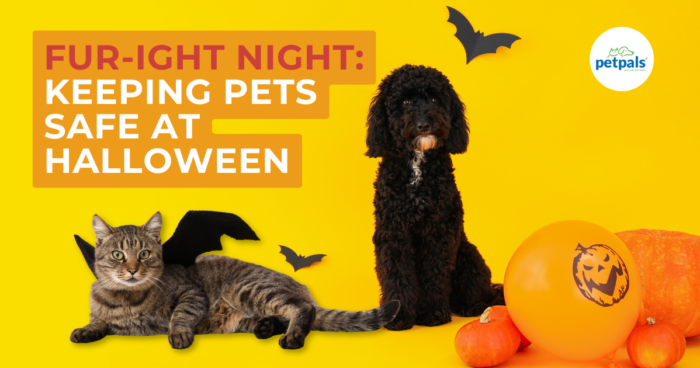
Halloween is an exciting time for families—but for our furry friends, all the extra noise, costumes, and treats can be overwhelming. At Petpals, we want to help you keep your pets happy, calm, and safe while you enjoy the festivities.
1. Keep Treats Out of Reach
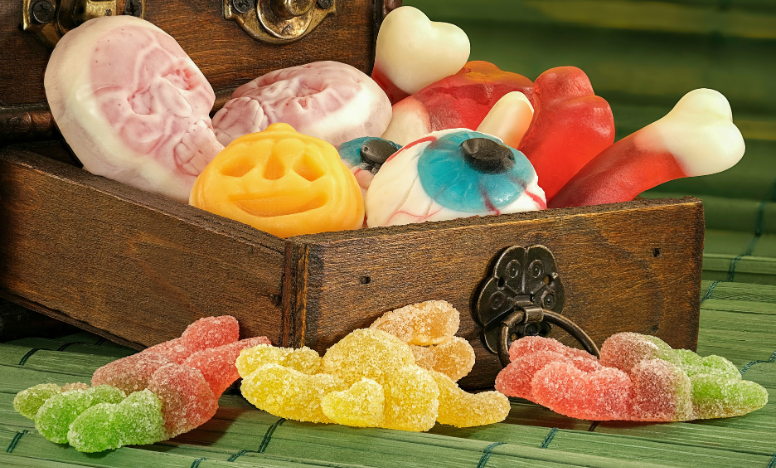
Halloween treats are tempting for both humans and pets, but many common sweets can be dangerous for animals. Here’s what to watch out for:
🍫 Chocolate
Chocolate contains theobromine and caffeine, both toxic to dogs and cats. These substances can affect the heart and nervous system, causing symptoms like:
- Vomiting
- Diarrhoea
- Rapid heart rate
- Restlessness
- Muscle tremors
- Seizures
Dark chocolate and cocoa powder are especially dangerous due to higher theobromine levels. Even small amounts can be harmful, particularly for smaller pets.
Emergency tip: If you suspect your pet has eaten chocolate, treat it as an emergency and seek veterinary advice immediately. You can use this Chocolate Toxicity Calculator for guidance, but always contact a vet or emergency service without delay.
🍬 Sweets with Xylitol
Xylitol, found in many sugar-free products like gum, sweets, and baked goods, is extremely toxic to dogs. It can trigger a rapid drop in blood sugar, causing weakness, lethargy, seizures, or even liver failure.
🧁 Other Hazardous Ingredients
- Grapes and raisins: Can cause kidney failure.
- Onions and garlic: Affect red blood cells, leading to anaemia.
- Alcohol: Depresses the nervous system and can be fatal.
- Macadamia nuts: Lead to weakness and overheating in dogs.
Always keep treats securely stored and educate family and guests about the dangers of sharing human food with pets.
2. Protect Pets from Frightening Noises
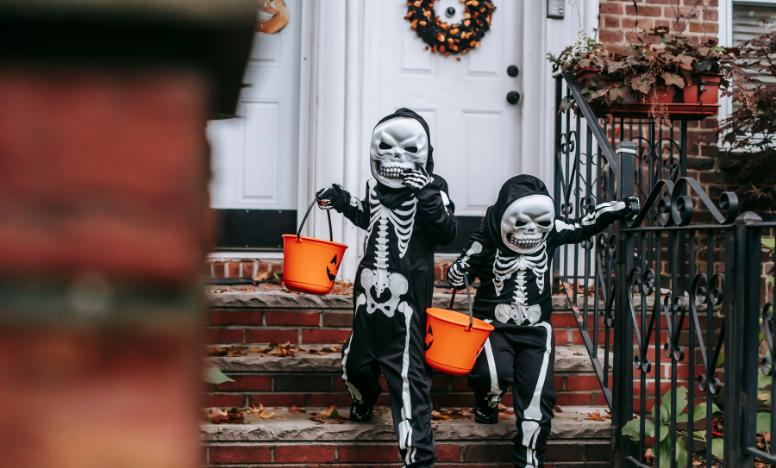
One of the biggest stressors for pets on Halloween is the constant knocking, doorbells, and unfamiliar voices from trick-or-treaters. Loud or sudden sounds can cause anxiety, trembling, or even attempts to escape.
Here’s how to help:
- Create a safe haven: Set up a quiet room away from the front door with your pet’s bed, toys, and some comforting background noise like soft music or a TV.
- Close doors and block access: Keep pets away from areas where people are coming and going. Baby gates can help keep dogs in a secure space.
- Use calming aids if needed: Pheromone diffusers, calming treats, or vet-approved anxiety products can help nervous pets relax.
- Distract with treats and toys: Give pets engaging toys or long-lasting chews to keep their mind off the noise outside.
3. Mind the Decorations
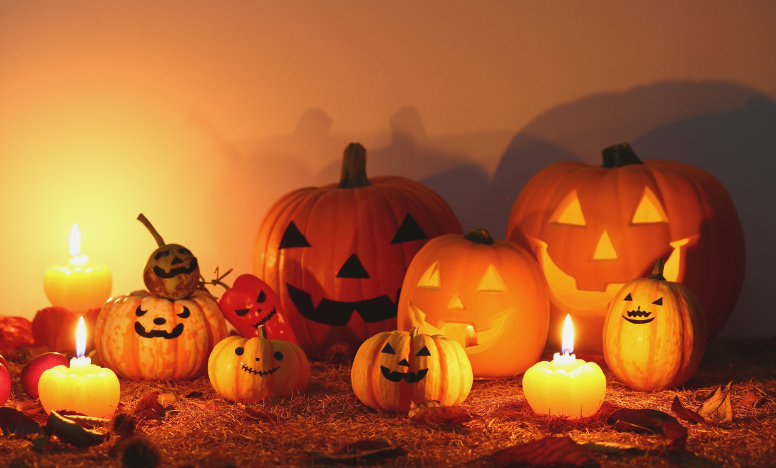
Jack-o’-Lanterns, candles, and decorative lights can be hazards. Keep open flames out of reach, ensure cords are tucked away, and avoid decorations that could be chewed or swallowed.
4. Keep Pets Indoors
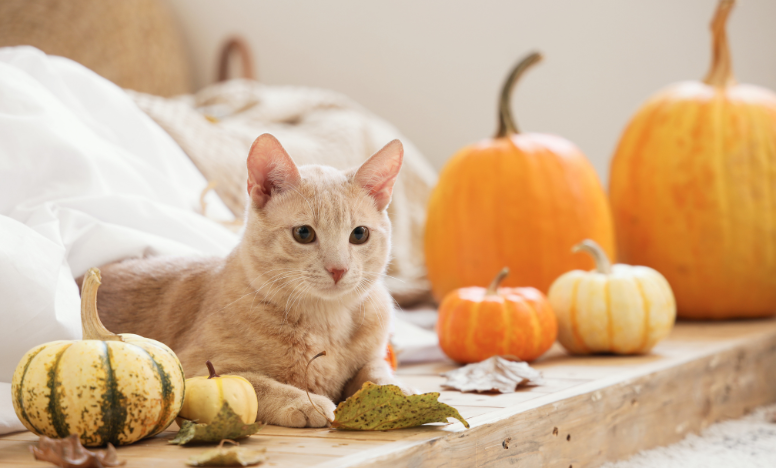
It’s safest to keep dogs and cats indoors on Halloween night. Loud noises, strangers, and unfamiliar costumes can trigger fear or even cause pets to bolt. If your pet must go outside, ensure they are securely leashed and supervised.
5. Costume Caution
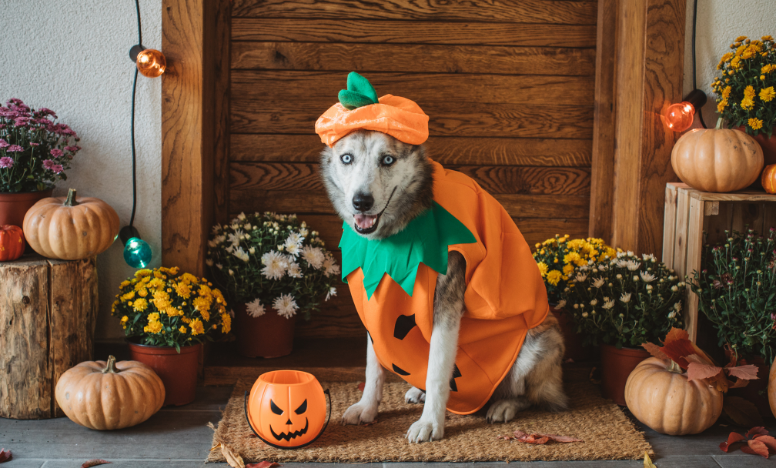
Not all pets enjoy wearing costumes—and some may feel anxious, restricted, or stressed. Your pet’s comfort and wellbeing should always come first! Signs of costume-related discomfort include:
❗ Trying to bite, scratch, or remove the costume
❗ Shaking, pacing, or hiding
❗ Refusing to walk or move naturally
❗ Panting or whining more than usual
If you do, however, decide to dress up your pet, keep these safety tips in mind:
✔️ Choose comfort over style: Select costumes that are lightweight, breathable, and do not restrict movement. Avoid tight-fitting outfits or anything that pulls on the neck, legs, or tail.
✔️ Keep faces clear: Never cover the eyes, nose, or mouth. Pets rely on sight, smell, and hearing to navigate, so a covered face can be stressful and disorienting.
✔️ Avoid choking hazards: Skip costumes with small parts, buttons, or decorations that could be chewed off and swallowed.
✔️ Supervise at all times: Even a comfortable costume can become hazardous if your pet gets tangled or stuck. Never leave pets unattended while dressed up.
✔️ Short trial runs: Introduce costumes gradually and let pets wear them for a short period first, rewarding them with treats and praise. This helps them associate the costume with positive experiences.
Keep in mind that many pets prefer not to wear costumes, and their comfort should always take priority—especially during what can already be a stressful time.
6. Identification Matters
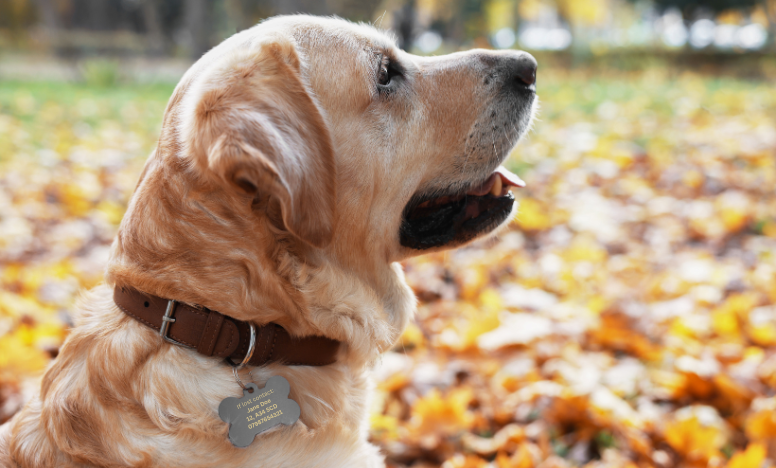
With the extra excitement on Halloween, it’s easy for pets to slip out unnoticed. Ensuring your pet has proper identification greatly increases the chances of a safe return if they get lost.
In the UK, it is a legal requirement for dogs to wear an ID tag that includes the owner’s name and address. For smaller ID tags you can simply add your house number and postcode. However, we also recommend adding your phone number to the tag—this can make being reunited with your pet much quicker in an emergency.
Also, make sure your pet is microchipped with up-to-date contact information—this is a reliable backup if the collar comes off.
A well-labelled ID tag gives you peace of mind and helps anyone who finds your pet return them quickly and safely.
7. Keep an Eye on Strange Behaviour
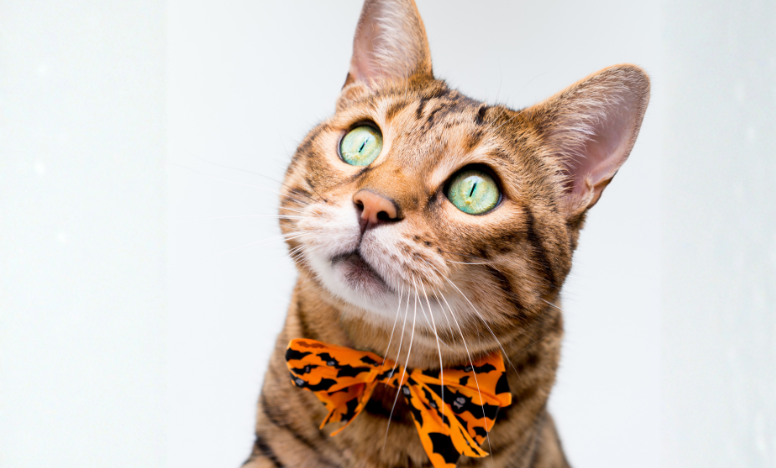
Some pets may hide, shake, or pace during Halloween chaos. Respect their need for space, and avoid forcing interaction. If anxiety is severe, speak to your vet about calming strategies or products.
Final Thoughts
Halloween can be fun for everyone—including pets—if you take a few simple precautions. By planning ahead and keeping your pets’ safety and comfort in mind, you can enjoy a spooky night without any scary surprises.
At Petpals, we’re here to support you in keeping your pets safe, happy, and loved all year round.