To Spay or Not to Spay? Making the Right Choice for Your Dog
24th February 2026
Deciding whether – and when – to spay your dog is one of the most important health decisions you’ll make as a pet owner. For years, early spaying has been widely recommended, but recent research shows the answer isn’t quite as one-size-fits-all as we once thought.
New evidence suggests that a dog’s breed, size and age all play a role in determining the best time to spay, and in some cases, delaying the procedure may help reduce certain long-term health risks.
So how do you make the right choice? Let’s break it down.
Why Do People Choose to Spay?
Spaying (the surgical removal of the ovaries and uterus) has several well-known benefits:
- Prevents unwanted litters
- Eliminates the risk of pyometra (a serious uterine infection)
- Reduces the risk of mammary cancer in some dogs
- Stops seasons, which many owners find easier to manage
For many dogs, these benefits are significant – but recent research shows timing matters more than we previously realised.
What Does the Research Say?
One of the largest studies of its kind, this comprehensive research by the University of California, Davis analysed veterinary records from tens of thousands of dogs across 35 breeds over 15 years to examine how the age at which a dog is spayed influences the risk of:
- Joint disorders (such as hip dysplasia and cruciate ligament injuries)
- Certain cancers (including mast cell tumours and lymphoma)
- Urinary incontinence in females
The findings showed major differences between breeds. Find the full study published by Frontiers in Veterinary Science.
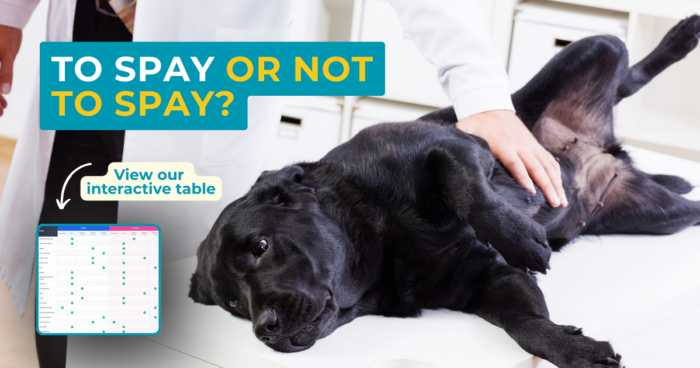
Please find Petpals’ recommendation guide adapted from the study:
Click to view the full table.
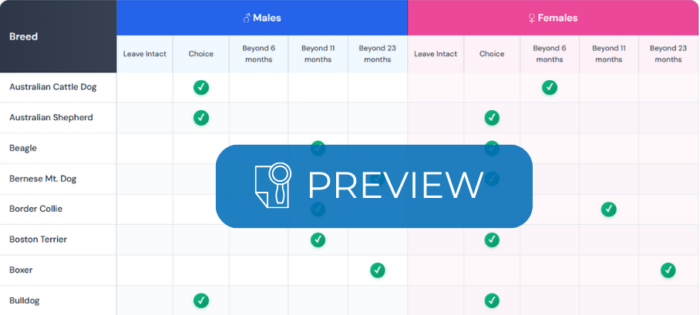
Key takeaways:
- Small breeds generally showed no increased risk of joint problems related to spaying at any age.
- Medium and large breeds were more likely to develop joint disorders if spayed very early (particularly before 6 months).
- Some breeds showed an increased risk of certain cancers when spayed at younger ages.
- In many cases, waiting until physical maturity reduced these risks without removing the overall benefits of spaying.
Breed and Size Really Do Matter
One of the most important messages from the study is that body size counts.
- Small dogs (such as Chihuahuas, Yorkshire Terriers and Maltese) generally tolerate early spaying well.
- Larger and giant breeds (such as Golden Retrievers, Boxers and Rottweilers) often benefit from delayed spaying to allow bones and joints to fully develop.
This is because sex hormones play a role in bone growth. Removing them too early in some breeds can affect joint development, increasing the risk of injury later in life.
What About Health Risks if You Don’t Spay?
Leaving a dog unspayed isn’t risk-free either. The research also highlights conditions more common in intact females, including:
- Pyometra, which can be life-threatening if not treated promptly
- Mammary cancer, particularly in older unspayed females
This is why the decision isn’t simply “to spay or not to spay”, but rather when is the safest and healthiest time for your dog.
Behavioural and Developmental Effects of Spaying Too Early
Emerging research suggests that spaying a dog too early may influence behavioural and emotional development. Sex hormones play an important role in brain maturation, particularly in areas linked to confidence, fear responses and social behaviour. Removing these hormones before puberty can affect how these traits develop.
A study published in Frontiers in Veterinary Science found that dogs neutered before around 5.5 months of age showed higher levels of aggression towards household members compared to those neutered later. Other large-scale behavioural studies have also linked early spaying with increased fearfulness and anxiety-related behaviours, while dogs allowed longer exposure to natural hormones tended to display more stable behavioural traits.
While spaying remains an important health and population-control decision, these findings highlight why timing matters. Allowing a dog to reach a more mature stage of physical and emotional development may help support balanced behavioural outcomes, depending on the individual dog, breed and lifestyle.
Practical Tips for Pet Owners
If you’re feeling unsure, you’re not alone. Here are some sensible steps to help guide your decision:
1. Talk to your vet about your dog’s breed and size
Ask specifically about breed-related risks, not just general advice.
2. Avoid rushing the decision
Early spaying may still be appropriate for some dogs, but it’s worth discussing whether waiting a few extra months could be beneficial.
3. Consider lifestyle and management
Can you safely manage a dog through seasons? If so, delayed spaying may be an option.
4. Review health history
Family history, growth rate and overall health can all influence timing.
5. Remember this is individual
What’s right for one dog may not be right for another – even within the same breed.
The Bottom Line
Spaying remains an important and beneficial procedure for many dogs, but modern research shows that timing matters. Thanks to studies like this, pet owners and vets can now make more informed, breed-specific decisions that balance long-term health with practical considerations.
If you’re ever unsure, a personalised conversation with your vet is always the best place to start – because when it comes to your dog’s wellbeing, informed choices really do make all the difference.
Looking for professional, reliable pet care while you’re away or at work? Use one of our trusted Petpals teams for dog walking or dog home boarding services.